Michał Słowiński
Researcher
Institute of Geography and Spatial Organization
Polish Academy of Sciences
Researcher Profile
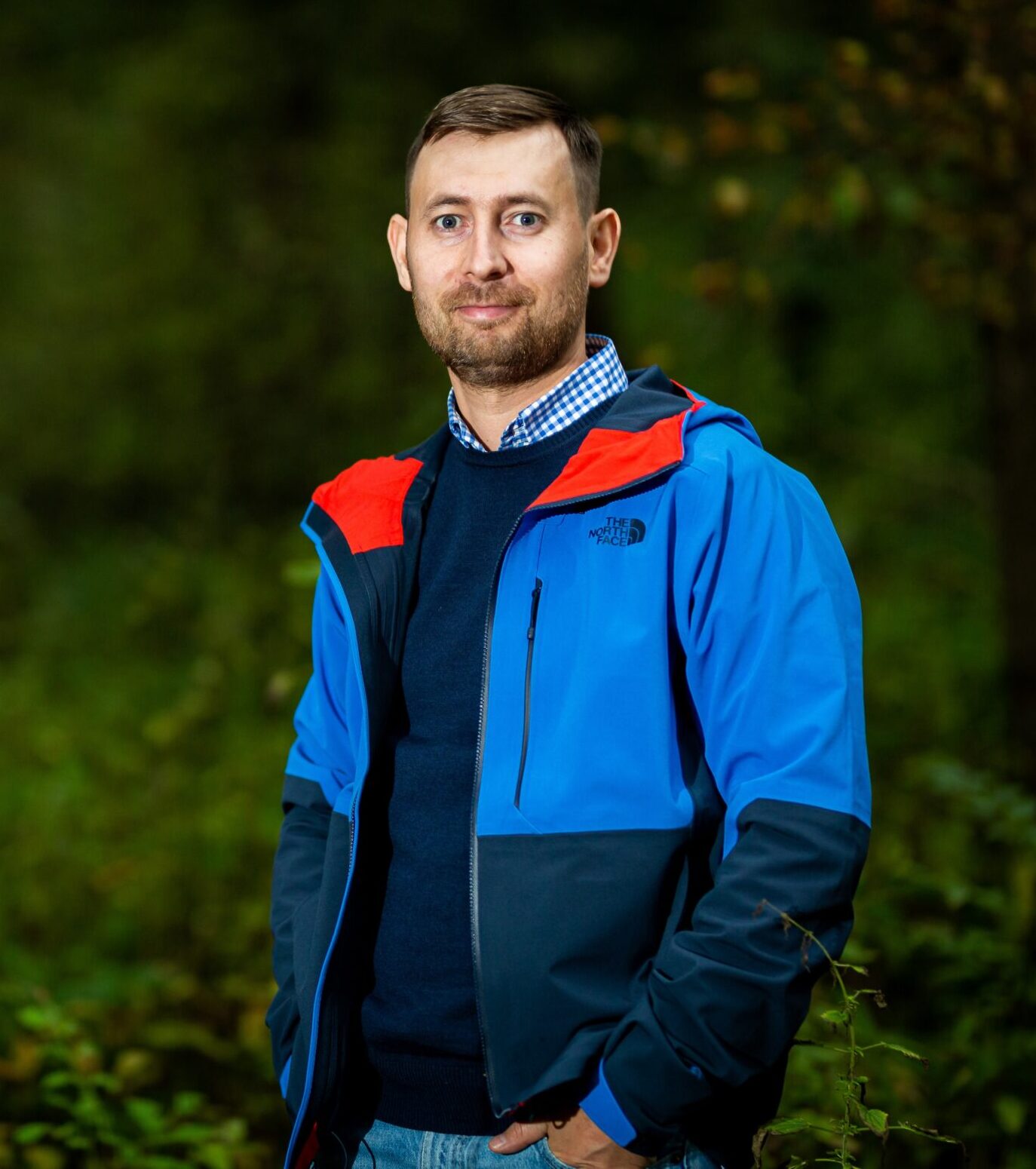
Michał Słowiński is a researcher at the Institute of Geography and Spatial Organization of the Polish Academy of Sciences (IGiPZ PAN). His research focuses on reconstructing long-term environmental change from natural archives, particularly peatlands and lake sediments. He applies multi-proxy palaeoecological and geochemical approaches such as plant macrofossils, pollen and non-pollen palynomorphs, charcoal, chironomids, testate amoebae, and sediment physical properties supported by radiocarbon chronologies, to quantify past climate variability, hydrological change, carbon accumulation, and disturbance regimes. A central theme of his work is disentangling climate-driven signals from human impacts (e.g., land-use change, forest exploitation, and fire history) to understand how coupled socio-ecological systems evolved through the Holocene.
His current research also uses palaeoecological proxies to examine lead–lag relationships in ecosystem responses to abrupt climate shifts during the last glacial cycle. Combining ecological and palaeoecological perspectives, he investigates how extreme events affect lake and wetland functioning, aiming to identify resistance, thresholds, and early-warning indicators of change. This includes assessing how climate change, human activities, and extremes such as droughts, floods, and windstorms have shaped ecosystems in the past and are influencing them today. He also works to translate palaeoenvironmental reconstructions into actionable evidence for landscape management and conservation, including the use of remote-sensing data to contextualize field observations and map sensitive features in forested landscapes.
Within the EUROpest project, Prof. Słowiński contributes expertise on long-term ecosystem baselines and disturbance histories relevant to pest outbreaks, human pressures, and ecosystem resilience. He supports the project by extending observational records with sediment-archive evidence, advising on sampling design and proxy selection to identify key stressors and threshold behaviour, and integrating palaeoecological data with contemporary ecological and spatial analyses to inform risk assessment and adaptive management.
List of Relevant Publications:
Mapping and spatial distribution of relict charcoal hearths across Poland. Earth System Science Data, 2026, 1–25
Authors
Słowiński, M., Halaś, A., Niedzielski, M. A., Szewczyk, K., Jonczak, J., Łuców, D., Tyszkowski, S., Słowińska, S., Gruszczyńska, A., Kruczkowska, B., Chojnacka, A., Polkowski, T., Sztabkowski, K., Brykała, D., Wolski, J., Samojlik, T., Kaszkiel, A., Gmińska-Nowak, B., and Związek, T.
The most complete Holocene peat record from Central Europe: multi-proxy reconstruction of postglacial wetness changes and climate events from Linje peatland, Poland. Climate of the Past 2025, 21, 11, pp. 1933–1959
Authors
Poolma Eliise, Marcisz Katarzyna, Amon Leeli, Fiutek Patryk, Kołaczek Piotr, Leszczyńska Karolina, Mauquoy Dmitri, Słowiński Michał, Veski Siim, Wagner-Cremer Friederike, Lamentowicz Mariusz
Research perspectives on historical legacy of the Scots pine (Pinus sylvestris L.): Genes as the silent actor in the transformation of the Central European forests in the last 200 years. Elementa: Science of the Anthropocene 2025, 13, 1, pp. 1–9
Authors
Przybylski Paweł, Związek Tomasz, Kowalczyk Jan, Słowiński Michał
Holocene land‐use and climate forcing of ombrotrophic peatland dynamics in northwest Estonia. Journal of Geophysical Research-Biogeosciences 2025, 130, pp. 12–24
Authors
Roberts Harry, Andrews Luke, Słowiński Michał, Marcisz Katarzyna, Kołaczek Piotr, Amon Leeli, Veski Siim, Stivrins Normund, Heinsalu Atko, Lamentowicz Mariusz
With or against the river? Tracing changes and relationships between social and ecological systems on the Central Vistula Floodplain over the last 200 years. The Anthropocene Review 2025, 12, 2, pp. 302–326
Authors
Sobechowicz Łukasz, Obremska Milena, Brykała Dariusz, Ćwiek-Rogalska Karolina, Gąsiorowski Michał, Konopski Michał, Łotysz Sławomir, Mulczyk Anna, Samojlik Tomasz, Siwek Wojciech A., Słowiński Michał, Szewczyk Krzysztof, Stadnicka Maria, Targowski Michał, Theuerkauf Martin, Wolski Jacek, Związek Tomasz