Florence Mazier
Researcher
Laboratory of Geographical Environnement
CNRS, France
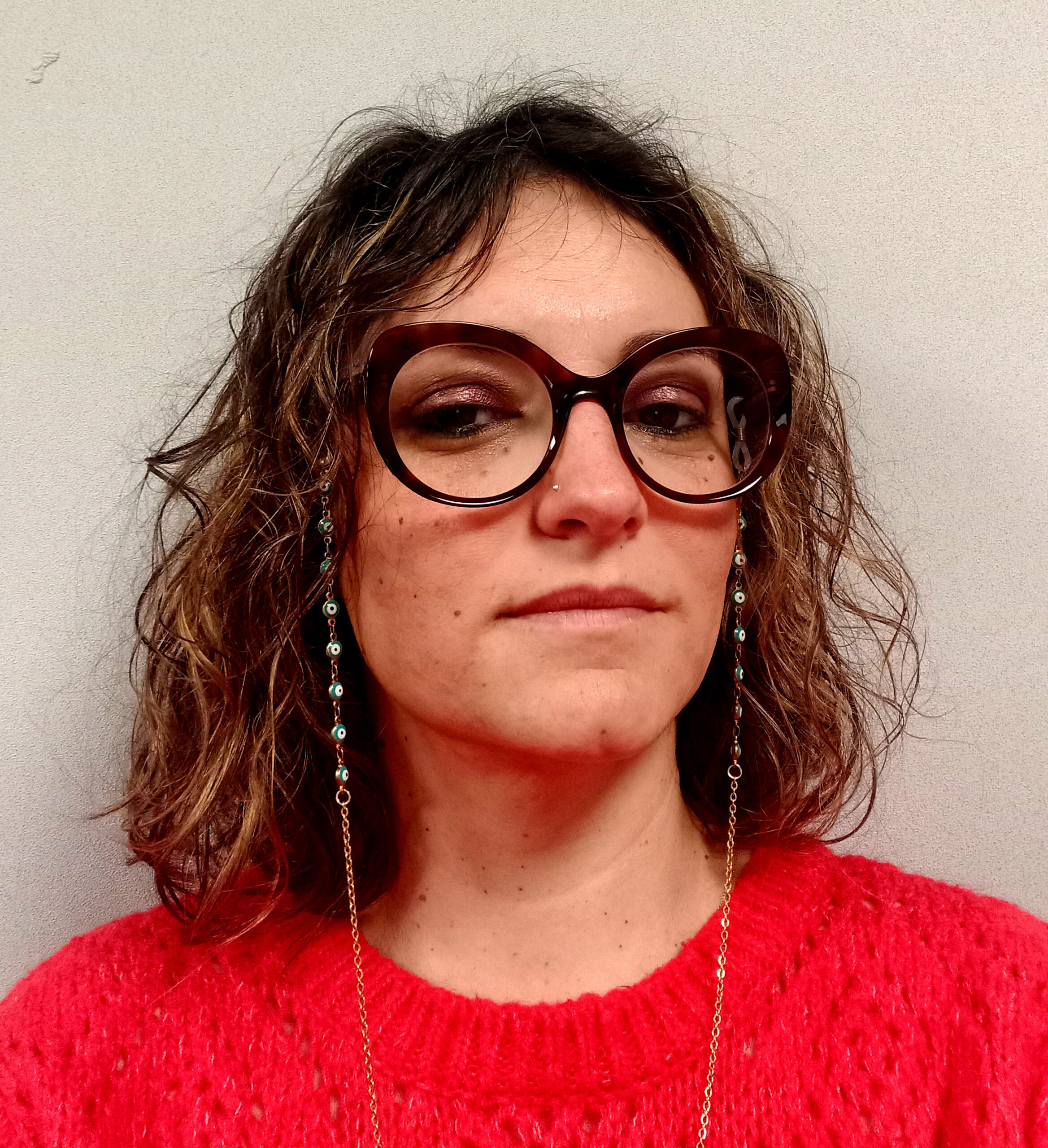
Researcher Profile
Dr. Florence Mazier (ORCID: 0000-0003-2643-0925) is a CNRS Researcher (Chargée de Recherche CNRS) at the GEODE Laboratory (CNRS- Université de Toulouse Jean Jaurès). Her research focuses on the co-evolution of human activities, ecological dynamics, and biodiversity, establishing contemporary pollen reference collections in mountainous areas, calibrating and modelling the pollen-vegetation relationship, and quantitatively reconstructing vegetation and land-use types throughout the Holocene. Dr. Mazier is trained as an Environmental Scientist, obtaining her co-tutelage thesis in Environmental Sciences from the Universities of Franche-Comté (France) and Neuchâtel (Switzerland). Prior to her current position, Dr. Mazier carried out postdoctoral international research in the Institute of Quaternary Sciences (Lund, Sweden) and in the Institute of Natural Sciences (Kalmar, Sweden), strengthening her expertise in palaeoecology and palaeoenvironmental reconstruction. Throughout her career, Dr. Mazier has participated in several national and international research initiatives, including European collaborative projects. She has contributed both as principal investigator or Work Package coordinator in multiple projects and as a team member in others. She was co-director of the AXE 1 research unit at GEODE (2016–2024), dedicated to palaeoecology, and currently serves as Vice Director of the laboratory. Within this project, she will lead the pollen-based quantitative reconstruction of past landscapes and vegetation cover in the studied regions. Her work will provide a robust environmental framework to assess how landscape structure may have influenced disease dynamics, in close collaboration with paleoecology, history, palaeogenetic and palaeoclimatic analyses.
List of Relevant Publications:
Does increasing human impact across the holocene result in simplification of vegetation composition and diversity across Europe? A pollen-based spatio-temporal approach. Quaternary Science Reviews, 374, pp.109776. ⟨10.1016/j.quascirev.2025.109776⟩
Authors
Röhm C., Serge M. A., Fyfe R., Marquer L., Lagnoux A., Klein T., Galop D., Mazier F.
2024 BACKLAND: spatially explicit and high-resolution pollen-based BACKward LAND-cover reconstructions. Ecography. 2024: e06853
Authors
Plancher C., Mazier F., Houet T., Gaucherel C.
2022 Spatial and temporal patterns of upland vegetation over the last 200 years in the northern pyrenees: Example from the Bassiès valley, Ariège, France. Quaternary Science Reviews, Elsevier, 2022, 294, ⟨10.1016/j.quascirev.2022.107753⟩.
Authors
Plancher C., Galop D., Houet T., Lerigoleur E., Marquer L., Sugita S., Mazier F.
2022. Big Data Palaeoecology reveals significant variation in Black Death mortality in Europe. Nature of Ecology and Evolution
Authors
Izdebski A., Guzowski P., Poniat R., Masci, L., Palli J., Vignola C., Bauch M., Cocozza C., Fernandes R., Ljungqvist, F., Newfield T., Seim A., Abel-Schaad D., Alba-Sánchez F., Björkman L., Brauer A., Brown A., Czerwiński S. Ejarque A., Filoc, M., Florenzano A., Fredh E., Fyfe R., Jasiunas N., Kalczek P., Kouli K., Kozáková R., Kupryjanowicz M., Lagerås P., Lamentowicz M., Lindbahl M., López-Sáez J.A., Luelmo-Lautenschlaeger R., Marcisz K., Mazier F., Mensing S., Mercuri M.A., Mlecka K., Miras Y., Noryśkiewicz A., Novenko E., Obremska M., Pedziszewska A., Pérez-Díaz S., Piovesan G., Pluskowski A., Pokorný P., Poska A., Reitalu T., Rösch M., Sadori L., Sá Ferreira C., Sebag D., Słowiński M., Stancikaite M., Stivrins N., Tunno I., Veski S., Wacnick A., Masi A.