Alessia Masi
Researcher
Department of Environmental Biology
Sapienza University of Rome, Italy
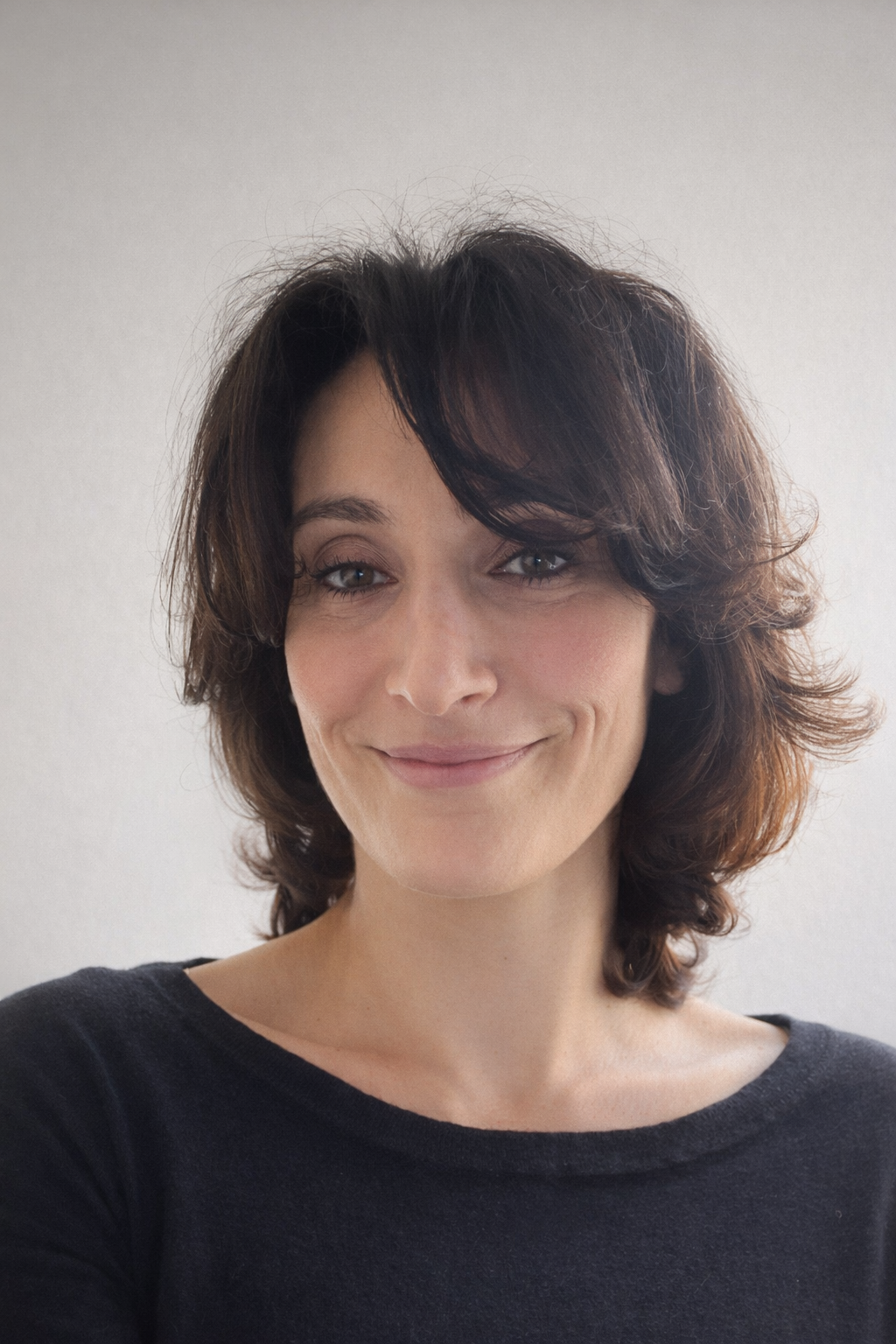
Researcher Profile
Alessia Masi is an archaeobotanist and palynologist whose research focuses on long-term socio-ecological dynamics in the Mediterranean and Balkan regions. Her work investigates vegetation change, human–environment interactions, and the resilience of past societies to climatic variability, with particular attention to sustainable land-use practices across historical and prehistorical timescales.
Her research is grounded in the analysis of high-resolution paleoenvironmental archives and integrates multiple proxies. Through these approaches, she reconstructs past landscapes and explores how climate fluctuations and human activities jointly shaped environment over the long term. A key aspect of her expertise lies in the interpretation of vegetation dynamics within their social, economic, and cultural contexts.
She has extensive experience in integrating paleoenvironmental data with archaeological and historical evidence, allowing for robust interdisciplinary interpretations. She has worked closely with archaeologists and historians to link environmental signals with settlement patterns, land-use strategies, and documented historical processes. This integrative perspective enables her to move beyond purely environmental reconstructions and address broader questions related to human decision-making and environmental sustainability.
Within the EUROpest project, Alessia Masi contributes her expertise by working on selected paleoenvironmental sequences with the aim of producing new, well-constrained records. These records will be interpreted in close connection with the multiple strands of research developed within the project, supporting a comprehensive understanding of long-term environmental change, land-use practices, and human impacts on vegetation.
List of Relevant Publications:
2025. Consilience in practice: Social–ecological dynamics of the Lake Volvi region (Greece) during the last two millennia. Journal of Quaternary Science 40(3), 459-480. DOI: 10.1002/jqs.3645
Authors
Masci, L., Liakopoulos, G. C., Gromig, R., Kolovos, E., Kouli, K., Moros, M., Sadori L., Sarantis A., Slavin P., Sypiański J., Vidras G., Vignola C., Wagner B.; Izdebski A., Masi A.
2025. Mountainous vegetation succession and land use during the last millennium in the Peloponnese (southern Greece): Environmental change and economic development in an isolated periphery. Journal of Quaternary Science, 40(7) 1269–1284. DOI: 10.1002/jqs.70007
Authors
Kouli K., Liakopoulos G.C., Vasileiadi G., Lamprakis D., Malliaris A., Masci L., Masi A., Moros M., Papadaki M., Vignola C., Avramidis P., Izdebski A.
(2022). Palaeoecological data indicates land-use changes across Europe linked to spatial heterogeneity in mortality during the Black Death pandemic. Nature Ecology & Evolution 6, 297–306. DOI: 10.1017/ahss.2022.114
Authors
Izdebski A., Guzowski P., Poniat R., Masci L., Palli J., Vignola C., Bauch M., Cocozza C., Fernandes R., Ljungqvist F.C., Newfield T., Seim A., Abel-Schaad D., Alba-Sánchez F., Björkman L. Brauer A., Brown A., Czerwiński S., Ejarque A., Fiłoc M., Florenzano A., Fredh E.D., Fyfe R., Jasiunas N., Kołaczek P., Kouli K., Kozáková R., Kupryjanowicz M., Lagerås P., Lamentowicz M., Lindbladh M., López-Sáez J.A., Luelmo-Lautenschlaeger R., Marcisz K., Mazier F., Mensing S., Mercuri A.M., Milecka K., Miras Y., Noryśkiewicz A.M., Novenko E., Obremska M., Panajiotidis S., Papadopoulou M.L., Pędziszewska A., Pérez-Díaz S., Piovesan G., Pluskowski G., Pokorny P., Poska A., Reitalu T., Rösch M., Sadori L., Sá Ferreira C., Sebag D., Słowiński M., Stančikaitė M., Stivrins N., Tunno I., Veski S., Wacnik A., Masi A.
2022. Landscape Response to Dynamic Human Pressure in the Paliouras Lagoon, Halkidiki Peninsula, Macedonia, Greece. Quaternary, 5, 54. https://doi.org/10.3390/ quat5040054
Authors
Masci L., Vignola C., Liakopoulos G.C., Kouli K., Koukousioura O., Aidona E., Moros M., Vouvalidis K., Izdebski A., Masi A.
2022. Mid-late Holocene vegetation history of the Argive Plain (Peloponnese, Greece) as inferred from a pollen record from ancient Lake Lerna. PLoS ONE 17(7): e0271548.
Authors
Vignola C., Hättestrand M., Bonnier A., Finné M., Izdebski A., Katrantsiotis C., Kouli K., Liakopoulos G.C., Norström E., Papadaki M., Strandberg N.A., Weiberg E., Masi A.